

The woman sitting near my family in a restaurant wore a sweatshirt reading: “Fear Thy God.”
I felt an urge to tell her “I like your sweatshirt.” Then I paused. No, I didn’t actually like it. I wouldn’t wear that sweatshirt myself.
Rather, I realized, I respected her sweatshirt. I respected her for expressing her religious opinions openly. And I respected the idea that I read into the sweatshirt: practicing acts of kindness to others, as God-fearing people often aspire to do. I said nothing though, because I had no idea what she intended by her sweatshirt and I was busy concentrating on a more urgent task at hand: getting my children to eat their green beans.
Yet, what is the difference between respecting and liking? And why did I quickly reject the liking and embrace the respecting?
‘Liking’ implies agreement. Especially since the rise of social media, to ‘like’ is akin to saying: ‘I support you,’ ‘I’m with you,’ ‘Amen, my friend.’
‘Respecting’ is heavier. I don’t just support the ideas of freedom of religion and increasing kindness on earth: I strive to live those ideas every moment of my life.
To live an idea vs. to give lip service to it. To respect vs. to like.
Etymology affirms this distinction:
‘To like’ comes from the Old English lician, “to please” or “be pleasing.”
‘To respect’ comes from the Latin respectere, to look back at (think “re” + spectacles), to think again, to look at history, to act slowly & meticulously.
Liking is about positive feelings.
Respecting is about thoughtful actions to achieve good.
Innovating the Like
In my reveries when I’ve become social media supreme leader, I immediately institute two changes: 1) eliminate the like button and 2) eliminate the news feed.
These two moves would infuriate social media shareholders for these features are, in fact, two of the most profit producing innovations in business history.
1) The news feed allows users to engage with constantly novel information calculated to most engage them.
2) Similarly, ‘the like,’ as a Wired magazine retrospective phrased it: “fed human beings’ constant craving for validation by turning every post into a popularity contest.” I remember fifteen years ago learning that a high school classmate had ‘innovated the like’ at Facebook. My jaw dropped: “That counts as innovation? A digital thumbs up?” But ignore the like button’s social demerits—it is a blockbuster money maker.
But these innovations are so profitable because they prey on humanity’s worst inborn addictions. The ‘like’ stokes our desire for external validation, and the algorithmic news feed stews in-group reinforcement making us see a narrow and concurring opinion cocoon.
It was no coincidence that when Facebook settled cases with many States last week for $17 billion, the terms they agreed to included limiting the news feed and banning “likes” tallies for minors.
These changes, I think, are great news for minors’ mental health, and would be boons for adult health, too. But despite celebrations in the news by dedicated public servants, I am certain that Facebook and other social media platforms will devise new ways to suck people in.
Such is the nature of multi-trillion-dollar industries: they don’t go away because of a law or settlement. Only a deep respect for this problem and a resulting decades-long effort in law, enforcement, and cultural behavior will tame the worst effects of pernicious social platforms.
National Parks and Respecting
In 1872, Congress “dedicated and set apart as a public park or pleasuring-ground for the benefit and enjoyment of the people” Yellowstone National Park, the first national park in the known universe.
“A pleasuring-ground for the benefit and enjoyment of the people.”
But as so often occurs, appearances decide. We confuse what is proclaimed for what is achieved.
In reality, despite Congress providing for “the preservation, from injury or spoliation, of all timber, mineral deposits, natural curiosities, or wonders,” timber businesses logged the park for decades and visitors snatched pieces of its famous geysers.
Though Congress stated that there should be no “wanton destruction of the fish and game” and prohibited their “capture or destruction for the purposes of merchandise or profit,” for decades, big game hunters routinely massacred animals in Yellowstone, including reducing the bison population from thousands to just 25.
Respecting the park, by contrast, took enormous effort. In person. By flesh and blood people. Specifically, Company M, First United States Cavalry. They spent decades on skis and horseback, chasing down poachers and others who tried to desecrate the land.
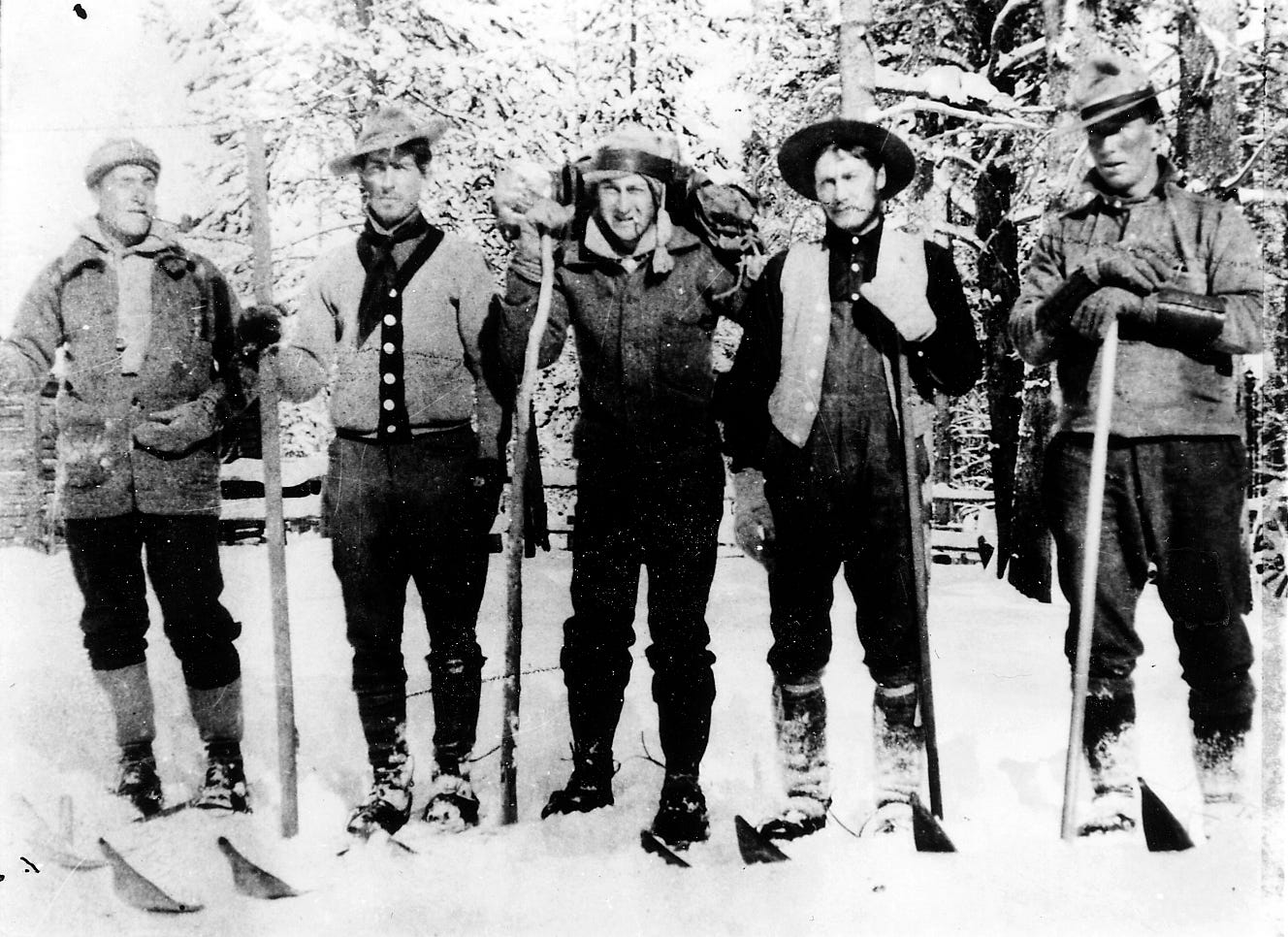
Yellowstone became protected only because people put in the sustained effort to make it so. They respected the problem and they respected the park.
Around the same era, conservationist John Muir, at the end of an 1897 essay, mourned California’s giant Sequoia trees:
“God has cared for these trees, saved them from drought, disease, avalanches, and a thousand straining, leveling tempests and floods; but he cannot save them from fools.”
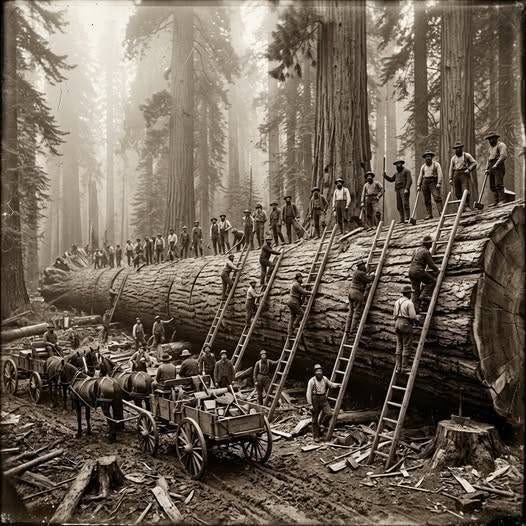
Even after Congress established Yosemite National Park in 1890, logging continued. People destroyed the world’s largest trees even though they proved uneconomical to harvest.
As with Yellowstone, decades of armed enforcement, as well as land purchases, finally protected Yosemite and Sequoia and Kings Canyon from human destruction. What remains are among the greatest natural treasures in the world: preserved, sacred, respected.
We Are What We Do
Americans spend an average of 140 minutes per day on social media and 150 more minutes on television. Loneliness fills the hearts of 1 in 3 Americans, and the amount of time we spend alone increases as we age.
By contrast, Americans spend 37 minutes per day of quality time with loved ones.
How can we better the world when we spend our time in these proportions?
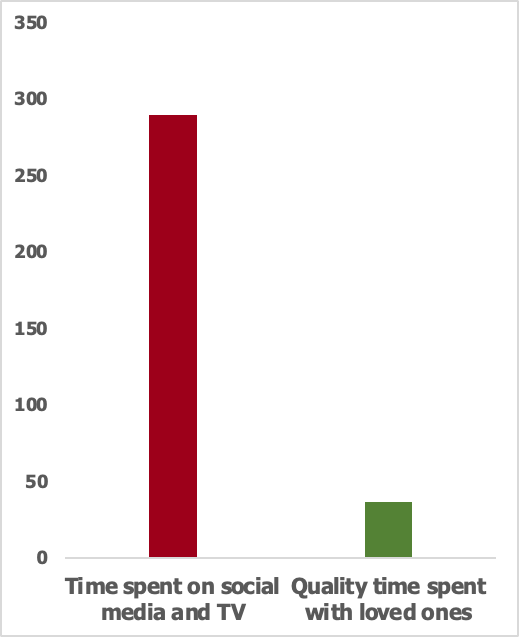
We only respect and fight for people and ideas if we spend quality time with them. For example:
Touch a giant Sequioa tree and connect with it, literally, in ways that a digital conservation petition cannot.
Sit with a friend struggling with drug addiction, in their run-down apartment, as they work to stay sober, and you better them and the world in ways far beyond liking an article about increased rehab funding.
Buy breakfast for a relative laid off from a job or an acquaintance forced to move into their car, listen to them, and enjoy their company. This respect and enduring love for them is different in kind from “liking” an Instagram post about unemployment insurance.
So, if you haven’t already done this, try it: spend 60 minutes fewer per day on social media and 60 minutes more per day talking to someone. The universe’s number of “likes” will decrease, but personal fulfillment and human kindness will swell.
Liking feeds our ‘craving for validation.’ Liking celebrates ‘pleasuring grounds.’ Liking happens on screens. Liking is a flippant compliment about a sweatshirt.
Respect is face to face. Respect is space for and learning from people who think differently from us. Respect is accepting the difficulty of major social problems. Respect is acting with vigor to protect our social, fraternal, national, and natural patrimonies.